HR for Dental Practices: The Complete Guide for Practice Managers

Why Dental Practice Managers Need This Guide: Expert Help for HR, Compliance and Staffing Issues

Running HR in a dental practice means managing a uniquely complex workforce: GDC-registered clinicians working alongside support staff, nurses, and receptionists on very different contracts and pay structures. Add CQC oversight, BDA guidance, NHS contract obligations, and now a wave of new employment law — and the compliance burden on a practice manager has never been heavier. 

Why HR in Dental Practices Has Changed (And Why It Matters Now)

What is HR management in a dental practice?

Most practices don’t lack effort — they lack structure. 

HR often lives in: 

    • One person’s knowledge

    • Spreadsheets

    • Emails and paper trails

It works… until something challenges it: 

  • A CQC inspection
  • A staff dispute
  • A legislative change like the Employment Rights Act 2025

And that’s where risk appears. 

Why compliant and effective HR matters for the CQC

HR and inspection are no longer separate conversations 

The CQC’s Well-Led domain has always covered staff management in principle. But in practice, inspectors are increasingly asking to see the evidence: training records, supervision logs, absence data, and how concerns are raised and handled. 

Practices that manage HR through disconnected spreadsheets, email threads, and paper files consistently struggle to produce this evidence at short notice. Those with joined-up systems — where absence, training, performance, and records all live in one place — are better placed to demonstrate compliance on the day. 

iComply dental compliance services benefit a dental practice team

What a CQC inspector may ask to see 

  • Arrow icon
    Staff training and induction records
  • Arrow icon
    Evidence of supervision and appraisals
  • Arrow icon
    Absence management records and patterns
  • Arrow icon
    How whistleblowing disclosures are handled
  • Arrow icon
    Holiday pay records (now a formal legal requirement)
  • Arrow icon
    How new employment rights are communicated to staff 

The state of HR in dental practices

Most practices are operating on informal systems.

The vast majority of dental practices have fewer than 20 staff. That’s small enough that many have never felt the need for a formal HR system — a shared spreadsheet, a filing cabinet of contracts, and institutional memory have got them this far. 

But the landscape is shifting. Record-keeping requirements are tightening. Rights are expanding. The consequences of getting it wrong are increasing — both through tribunal risk and through CQC inspection outcomes. The question for most practice managers is no longer whether to formalise HR, but how to do it without adding enormous overhead. 

The Core Risk: HR That Lives in Your Head (or Your Spreadsheet)

BEFORE VS AFTER: How HR Actually Changes 

Before: Person-dependent HR 

    • Absence tracked in a spreadsheet or diary

    • Training certificates stored in random folders

    • Performance managed informally

    • Return-to-work interviews “done but not recorded”

    • HR knowledge sits with one person

Result:
✔ Feels in control
✖ Hard to evidence
✖ High inspection and tribunal risk

After: System-supported HR 

    • Absence recorded and timestamped on day one

    • Training tracked with expiry alerts

    • Return-to-work interviews documented automatically

    • Probation and performance reviews structured

    • Records are accessible in one secure place

Result:
✔ Evidence ready at any time
✔ Reduced compliance risk
✔ Less reliance on one individual

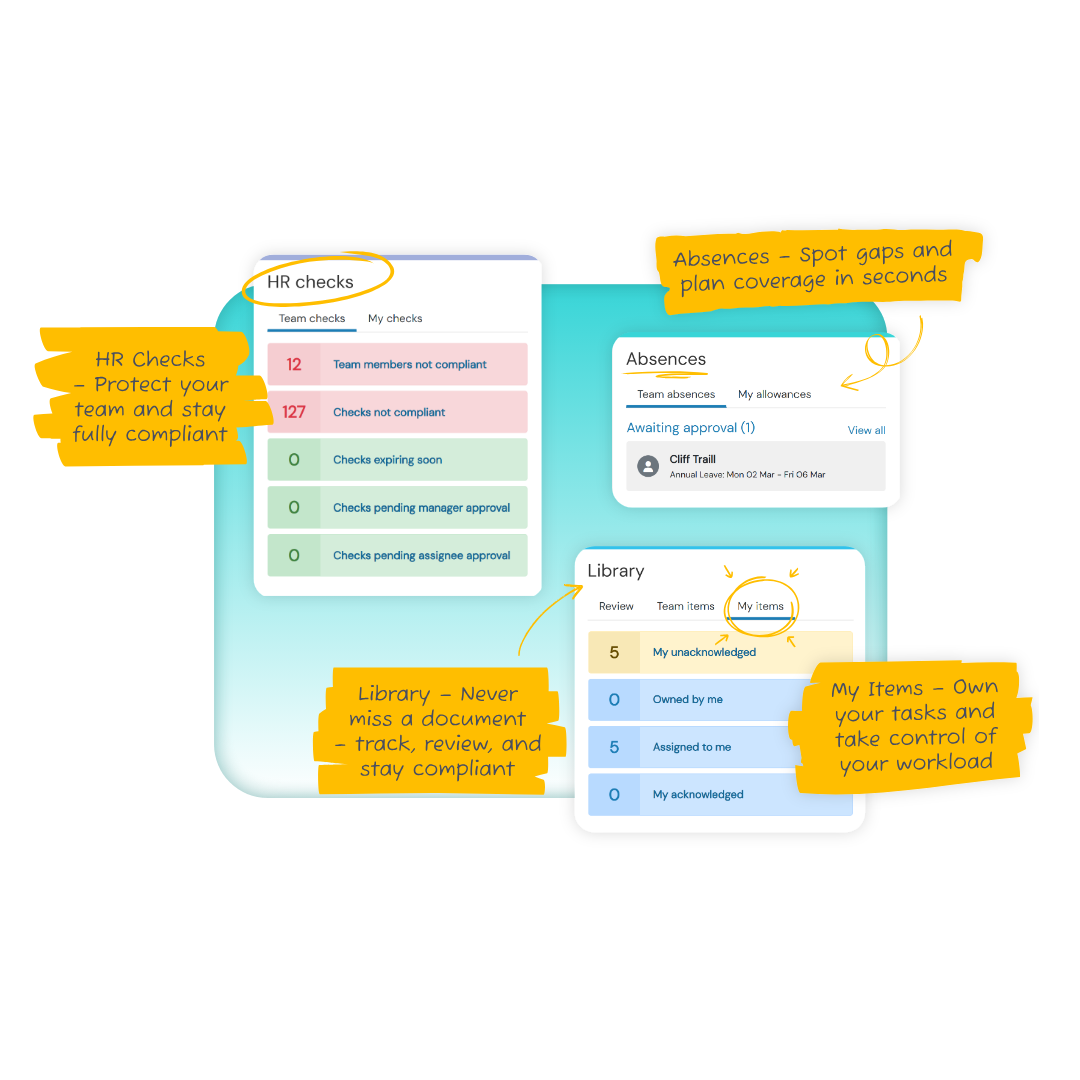
For many practices, this shift happens by moving to a connected system that brings HR and compliance into one place — rather than adding more manual processes. 

What does the Employment Rights Act 2025 mean for dental practices?

Why this changes everything

The key shift isn’t just new rules — it’s when evidence is required

  • Arrow icon
    From day one of absence 
  • Arrow icon
    From the first month of employment 
  • Arrow icon
    Months after an employee leaves 

Read more: Employment Rights Act 2025 guide 

Practices using connected HR systems can adapt to these changes faster, because policies, records, and processes are updated and stored centrally rather than manually updated across documents. This makes relevant documents easy to identify, track and gather should the need arise. 

CQC and HR — The Link Most Practices Miss

What CQC inspectors are really looking for

They are not just asking: 

  • “Do you manage HR?” 

They’re asking: 

  • “Can you show me how and prove it?” 

Examples include: 

  • Return-to-work records 
  • Training compliance dashboards 
  • Performance documentation 

This is where practices see the biggest difference when HR is structured digitally — instead of gathering evidence reactively, it’s already available when needed. It also means that all your HR information is stored in a secure, cloud-based system, significantly reducing the risk of data loss or theft compared to traditional storage methods. 

Absence Management — Why It’s a High-Risk Area for Dental Practice Managers/Management

The latest changes under ERA 2025:

  • Arrow icon
    SSP paid from day one 
  • Arrow icon
    More employees qualify 
  • Arrow icon
    Higher documentation expectations 

Read more: Absence management guide 

Many practices struggle here because absence touches payroll, compliance, and HR all at once — which is where integrated tools start to remove tedious admin tasks and reduce errors. 

Unfair Dismissal — The 2027 Shift

Why documentation now matters more than ever for dismissal processes

You will need evidence of: 

  • Arrow icon
    Probation reviews 
  • Arrow icon
    Performance discussions 
  • Arrow icon
    Absence records 
  • Arrow icon
    Disciplinary actions 

 Read more: Unfair dismissal guide 

Practices that capture these records as part of daily workflows — rather than retrospectively — are in a far stronger position if an unfair dismissal claim arises. 

But dismissal and absence are rarely where risk begins.

In many dental practices, the real exposure starts much earlier — in how contracts are structured, how terms are applied, and how early-stage decisions are made.

These are often handled informally, because they don’t feel urgent at the time. But they are the foundation everything else builds on.

Why clarity matters from the start in associate contracts

Issues rarely begin at the point of dispute — they begin at the point where the agreement was first set up.

You will need evidence of: 

  • Arrow icon
    The agreed terms of the associate relationship
  • Arrow icon
    How key contract clauses have been interpreted and applied
  • Arrow icon
    Any changes made to the agreement over time
  • Arrow icon
    How decisions were communicated between both parties

 Read more: Associate contracts guide 

Where agreements are unclear or applied inconsistently, resolving issues later becomes significantly more difficult.

Why clarity matters from the start in associate contracts

Issues rarely begin at the point of dispute — they begin at the point where the agreement was first set up.

You will need evidence of: 

  • Arrow icon
    The agreed terms of the associate relationship
  • Arrow icon
    How key contract clauses have been interpreted and applied
  • Arrow icon
    Any changes made to the agreement over time
  • Arrow icon
    How decisions were communicated between both parties

 Read more: Associate contracts guide 

Where agreements are unclear or applied inconsistently, resolving issues later becomes significantly more difficult.

Why employed contract details drive day-to-day HR decisions

For employed team members, it is the detail within contracts that creates most of the practical questions for practice managers.

You will need evidence of: 

  • Arrow icon
    How holiday entitlement has been calculated and applied
  • Arrow icon
    Sick pay arrangements and how they have been handled
  • Arrow icon
    Any changes to terms and how they were agreed
  • Arrow icon
    Consistency in how contractual terms are applied across the team

 Read more: Employment contracts guide 

Small inconsistencies at this stage can build over time, making decisions harder to justify if they are later challenged.

Why documentation matters in probation decisions

Probation is often the first point where performance concerns arise — and where decisions are most likely to be handled informally.

You will need evidence of: 

  • Arrow icon
    Probation review discussions
  • Arrow icon
    Performance concerns raised during the probation period
  • Arrow icon
    Any extensions and the reasons behind them
  • Arrow icon
    The outcome of the probation process and how it was communicated

 Read more: Probation guide 

Where probation is not managed consistently or clearly recorded, it becomes harder to demonstrate that decisions were fair.

Across all three areas, the pattern is consistent.

The work is happening — contracts are issued, conversations take place, decisions are made — but it is not always captured in a way that makes those actions easy to evidence later.

This is how risk builds quietly in the background, often without being visible day to day.

What a Good HR System Looks Like for a Dental Practice

Key capabilities

  • Arrow icon
    Tamper-proof audit trailsto help with internal investigations as well as for evidence for the CQC or other regulatory bodies 
  • Arrow icon
    Day-one absence recordingto make sure records remain accurate from the very start and reflect the employee’s full time with the practice 
  • Arrow icon
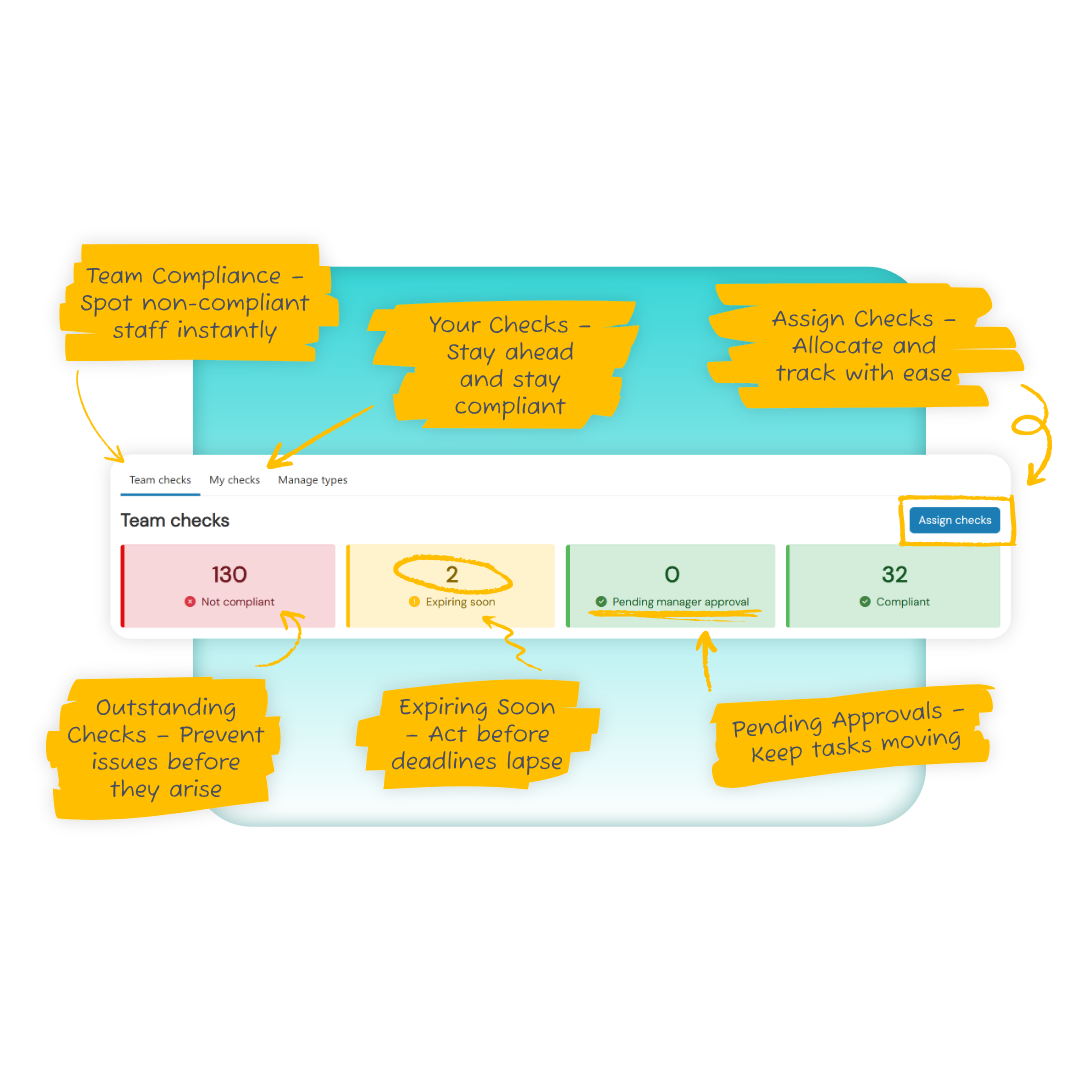
    Training and compliance trackingmaking it easy to spot and address gaps in these areas quickly, helping reduce risk 
  • Arrow icon
    Structured probation workflowsto ensure fairness and consistency for every employee coming into practice 
  • Arrow icon
    Reporting for inspectionsgiving you everything in one place, ready at the click of a button without spending hours pulling together spreadsheets 
  • Arrow icon
    Secure data storagekeeping all your data protected from loss or theft 

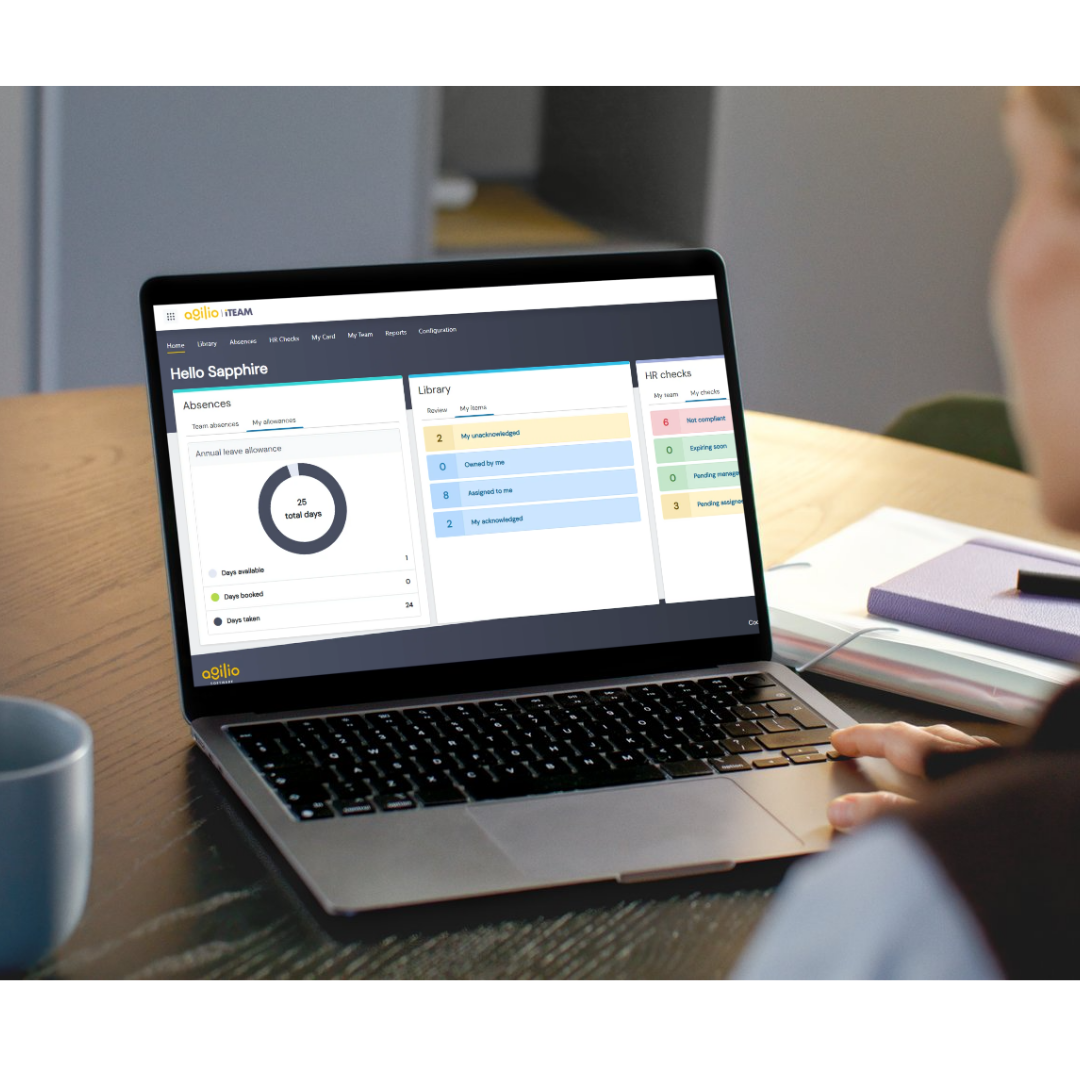
This is where solutions like Agilio One (bringing HR, compliance, and training together) and tools like iTeam become relevant — not because they add features, but because they reduce the complexity of managing these processes manually and separately

The Next Step: Assess Your HR Risk

You don’t need to change everything at once. Start with visibility. 

How can I assess my HR risk in a dental practice? 
You can assess your HR risk by reviewing how consistently you document absence, training, performance, and compliance — and whether you can provide the right evidence on demand. 

→ Take the 2-minute HR Gap Check

  • Checklist icon
    Score your current approach 
  • Checklist icon
    Identify gaps quickly 
  • Checklist icon
    Understand where risk sits 

Frequently Asked Questions: The April 2026 Employment Law Changes for Dental Practices

The first wave of Employment Rights Act 2025 changes came into force on 6 April 2026. Here are the answers to the questions dental practice leaders are asking right now.