
Why Spreadsheets Make CQC Inspections Harder

Toni Harper
Senior Marketing Lead - Dental
Ask most dental practice managers what their HR records look like and you’ll get one of two answers. Either a filing cabinet stuffed with paper, or a patchwork of spreadsheets — one for contracts, one for leave, one for training records, a few others nobody’s quite sure who last updated. Both present the same problem when a CQC inspector walks through the door: they don’t give you the visibility or the evidence you need, when you need it.
1. Spreadsheets can’t show you what you’re missing
CQC inspections of dental practices examine whether staff are properly recruited, trained, and managed — particularly under the Safe and Well-led quality statements. Inspectors expect to see evidence, not assurances. A spreadsheet can tell you what has been recorded, but it cannot alert you to what is absent. A missing training certificate is a gap that’s invisible until someone looks for it — and if that someone is an inspector, you’re already in difficulty.
2. Version control is a persistent problem
Spreadsheets are typically maintained by one person. When that person goes on leave, moves on, or simply forgets to update a cell, the record becomes stale without anyone noticing. Practices often discover this problem only under pressure — when preparing for inspection, running payroll, or dealing with an employment dispute. Multiple versions of the same spreadsheet in different inboxes compound the issue further. Inspectors looking for a clear, current, authoritative record of your workforce will find it difficult to rely on a document that may have last been updated six months ago by someone who no longer works there.
3. The Employment Rights Act 2025 has raised the bar on record-keeping
From 6 April 2026, dental practices are required to maintain formal records of annual leave taken, holiday pay calculations, and payments made in lieu of untaken holiday — for all staff, including those on variable or part-year hours. These records must be retained for six years. Failure to comply is a criminal offence, enforceable by the new Fair Work Agency (which launched on 7 April 2026).
A spreadsheet can technically hold this information, but the likelihood of it being consistently structured, accurately calculated, and reliably retained across six years is low in most practice environments. A single spreadsheet error in a holiday pay calculation can now have regulatory consequences — not just an unhappy employee.
4. Spreadsheets cannot evidence a culture of compliance
CQC inspectors are experienced at assessing whether a practice has embedded good practice into its day-to-day operations, or merely assembled records in a hurry before a visit. Spreadsheets, however complete, tend to suggest the latter. A well-maintained HR system that automatically tracks compliance, sends renewal reminders, and produces audit-ready reports tells a different story — one of a practice that manages its workforce proactively rather than reactively.
What good looks like
Practices that consistently perform well at CQC inspection tend to share a few common characteristics in their HR management:
- A single, authoritative source for all employee records — not scattered across files, inboxes, and spreadsheets
- Automated alerts for expiring documents, overdue training, and compliance deadlines
- Clear audit trails showing when records were created, updated, and by whom
- Holiday and absence records that are accurate, complete, and retention-compliant
- Policies that are up to date and demonstrably communicated to staff
Agilio’s HR management tools are built specifically for healthcare practices, with CQC compliance requirements embedded into the system design. If you’re currently managing HR on spreadsheets and would like to understand what a move to our compliance HR system, Agilio iTeam, would involve, speak to one of our team.
Next step: understand your current exposure
If you are unsure whether your current approach would stand up to scrutiny, take the 2-minute HR Gap Check. It highlights:
- where your processes may expose risk
- how prepared your practice is
- where to focus next
You may be interested in
Beyond Compliance: How AI is Helping Dental Practices Work Smarter
By Kirstie Young, Head of Product at Agilio Running a successful dental practice has never been more complex. Alongside delivering exceptional patient care, practices are managing compliance requirements, staff training, HR processes, workforce planning and governance activities – often across multiple disconnected systems. For many teams, critical information is spread across different platforms, creating fragmented…

Hidden Revenue
What Your Database Is Already Telling You The Question Most Practice Owners Are Never Asked How much of your revenue this year came from someone you’d already spoken to before? Not a new patient, not a new ad -someone already in your system. An enquiry that went quiet. A treatment plan that was never booked….
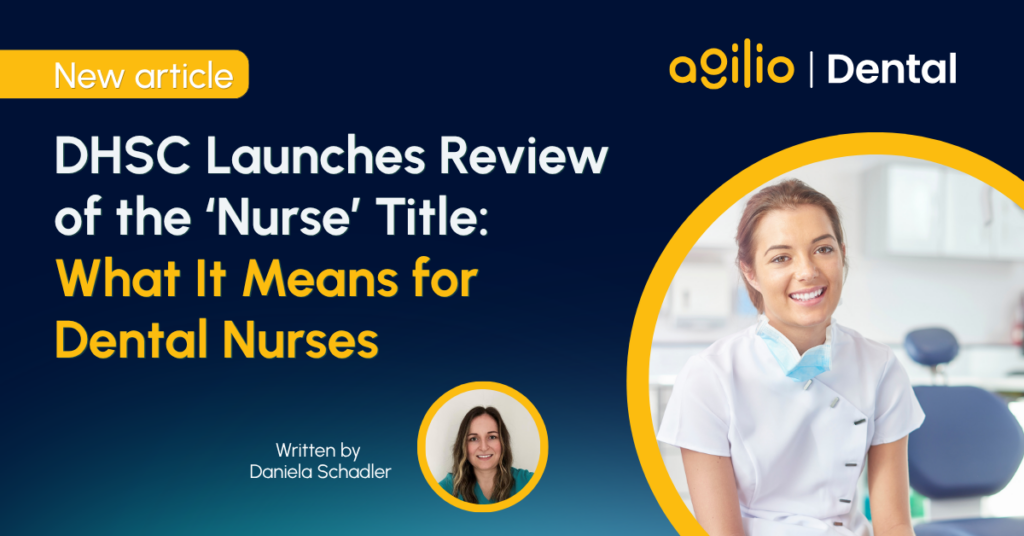
DHSC Launches Review of the ‘Nurse’ Title: What It Means for Dental Nurses
What we know so far about the review, and why the protected title ‘dental nurse’ is unlikely to be affected On 30th July 2026, the Department of Health and Social Care (DHSC) launched a call for evidence to consider stronger legal protection for the title ‘nurse’, to help prevent misuse by people who are not…