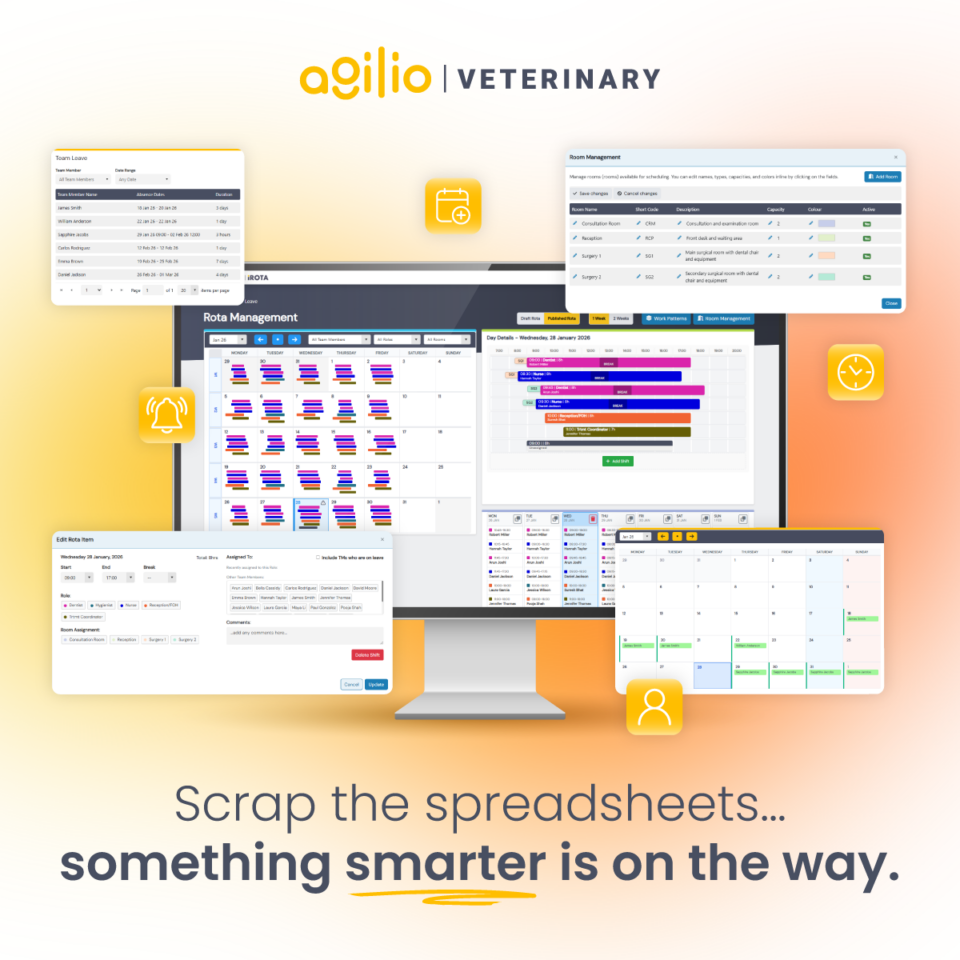



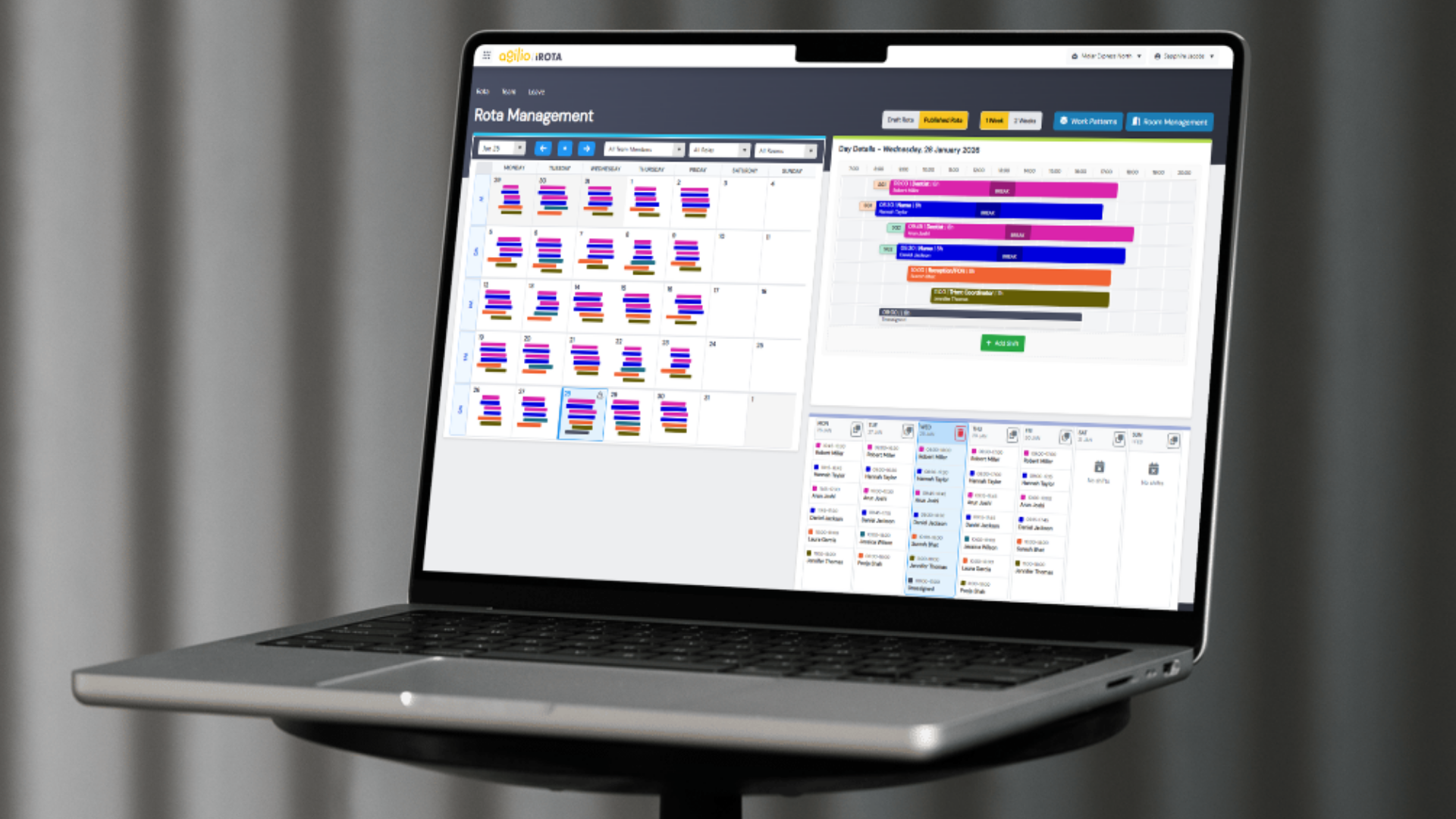
Effective rota planning in a veterinary practice means scheduling vets, nurses, receptionists, and ACAs across consults, ops, wards, and on-call, while keeping shifts fair and gaps visible. Most independent UK practices still use spreadsheets, which create admin burden, communication errors, and unfair patterns. Purpose-built rota software solves this by centralising scheduling, absence tracking, and shift visibility in one place.
Table of contents
- What is rota planning in a veterinary practice?
- What should a veterinary rota include?
- The biggest rota challenges for UK vet practices (and how to fix them)
- How to make shift patterns fairer in a veterinary practice
- How rota planning affects staff retention and burnout
- Rota spreadsheets vs rota software: a comparison
- How to choose rota software for an independent vet practice
- Frequently asked questions
What is rota planning in a veterinary practice?
Rota planning in a veterinary practice is the process of scheduling clinical and non-clinical staff across all shifts, roles, and sites to ensure safe, consistent cover throughout the week. It covers vets, registered veterinary nurses (RVNs), veterinary nursing assistants (VNAs), and receptionists.
Unlike a standard office rota, veterinary scheduling must account for: consult sessions, ops lists, ward cover, on-call and out-of-hours duties, CPD days, TOIL, and sickness. This makes it one of the most complex people-management tasks a practice manager or owner carries.
In a UK independent practice, rota planning typically sits with the practice manager or owner. In a multi-site group, it often involves site leads reporting to a central operations function.
What should a veterinary rota include?
A well-built veterinary rota should cover the following elements as a minimum:
- Role-specific shifts: separate schedules for vets, nurses, VNAs, and receptionists – not a single combined sheet
- Shift types: consult sessions, ops lists, inpatient/ward cover, reception cover, on-call, and out-of-hours
- Leave visibility: approved annual leave, TOIL, CPD days, and sickness all visible in the same view
- Weekend and on-call patterns: a clear system for distributing less desirable shifts fairly across the team
- Minimum safe cover: defined thresholds for each role and shift type (e.g. minimum one RVN on ward at all times)
- Staff notification: a mechanism for communicating the rota to the whole team, not just posting a printout
- Change management: a process for handling last-minute changes without creating confusion or errors
Most practices also benefit from rolling patterns – repeatable templates for standard weeks that reduce the time spent building the rota from scratch each cycle.
The biggest rota challenges for UK vet practices (and how to fix them)
Gaps you don’t see until it’s too late
When rotas live in spreadsheets or on whiteboards, absence is often tracked separately – in a different file, a group chat, or someone’s memory. This means a manager may approve leave without realising it creates a dangerous shortfall. The fix is a single view that combines the rota with all leave and absence data, so gaps are visible before, not after, they occur.
Last-minute changes creating confusion
Staff illness, emergency cover requests, and unexpected CPD commitments are a daily reality in veterinary practice. When changes are communicated via WhatsApp or email, there is no audit trail, staff may miss updates, and the master rota quickly becomes out of date. A centralised rota system with notifications and a change log solves this at the source.
On-call and weekend fatigue
Without a clear pattern, the same individuals tend to absorb the most on-call and weekend shifts – either because they are the most agreeable or because the manager loses track. This is a direct driver of burnout. Research by the RCVS (2023 Facts and Figures report) found that long and unpredictable hours are among the top factors cited by veterinary professionals considering leaving the profession.
Multi-site visibility
Independent practices that operate across two or more sites often lose visibility at a group level. Each site manages its own rota in isolation, making it difficult to redeploy staff, spot patterns, or ensure consistent standards of cover.
Admin time that should be clinical time
A practice manager spending three or four hours per week building and distributing rotas is a practice losing clinical-support capacity. In a sector where admin overload is a primary driver of manager burnout, rota admin is one of the most addressable costs.
How to make shift patterns fairer in a veterinary practice
Fair rota planning is one of the strongest levers a practice manager or owner has for improving staff satisfaction and reducing turnover. The principles below apply regardless of whether you use software or a spreadsheet.
- Rotate weekend and on-call shifts systematically: use a defined rotation cycle rather than informal allocation. Publish the cycle so the team can see it is consistent.
- Define what ‘fair’ means in writing: agree on what counts as a late, what counts as an on-call, and how these are compensated or balanced with TOIL. Ambiguity is a source of resentment.
- Give staff advance notice: aim for a minimum of four weeks’ notice on shifts. The longer the lead time, the easier it is for staff to plan personal commitments.
- Make the rota visible to everyone: staff should be able to check their own shifts without having to ask the manager. This reduces rota-related queries and builds trust.
- Review patterns regularly: run a monthly check to identify anyone consistently carrying more evenings, weekends, or on-calls than the rest of the team.
Purpose-built rota software makes these principles easier to execute by automating rotation logic, flagging imbalances, and giving staff self-service access to their schedules.
How rota planning affects staff retention and burnout
Staff retention is the single biggest operational challenge facing UK independent veterinary practices in 2026. The RCVS Facts and Figures 2023 report found that 56% of veterinary nurses cited excessive workload as a top concern, and that feeling undervalued in the scheduling process is a significant contributor to early career exit.
The connection between rota planning and retention works in several ways:
- Unpredictable rotas make it harder to maintain personal commitments, which contributes to stress and work-life imbalance
- Unfair distribution of undesirable shifts creates a visible, daily reminder of inequality in the practice
- Poor communication of rota changes creates uncertainty and additional cognitive load
- Managers who carry heavy rota admin burdens have less time for the supportive conversations that retain good staff
A practice that invests in reliable, transparent, fair scheduling signals to its team that their time and wellbeing matter. This is particularly important in independent practices, which compete for talent against corporate groups that can offer higher base salaries.
Independent practices cannot always compete on pay. They can compete on culture, fairness, and how well they treat their people. A well-run rota is a tangible, daily expression of that culture.
Rota spreadsheets vs rota software: a comparison
Most independent UK veterinary practices still manage rotas in Microsoft Excel or Google Sheets. Below is an honest comparison of spreadsheets versus purpose-built rota software for a practice of 10 to 50 staff.
| Factor | Spreadsheet | iTeam Rota |
| Building the rota | Manual, time-consuming, error-prone | Templates and patterns reduce build time significantly |
| Absence visibility | Separate file or manual cross-reference required | Leave and rota in one view — gaps visible instantly |
| Staff notifications | Manual (email, WhatsApp, printout) | Automated notifications on update |
| Change management | No audit trail — confusion common | Change log, notifications, and version history |
| On-call fairness tracking | Requires manual analysis | Automated rotation and balance reporting |
| Multi-site view | Requires multiple files and manual consolidation | Single screen, switchable between sites |
| Staff self-service | Not available | Staff check their own shifts from any device |
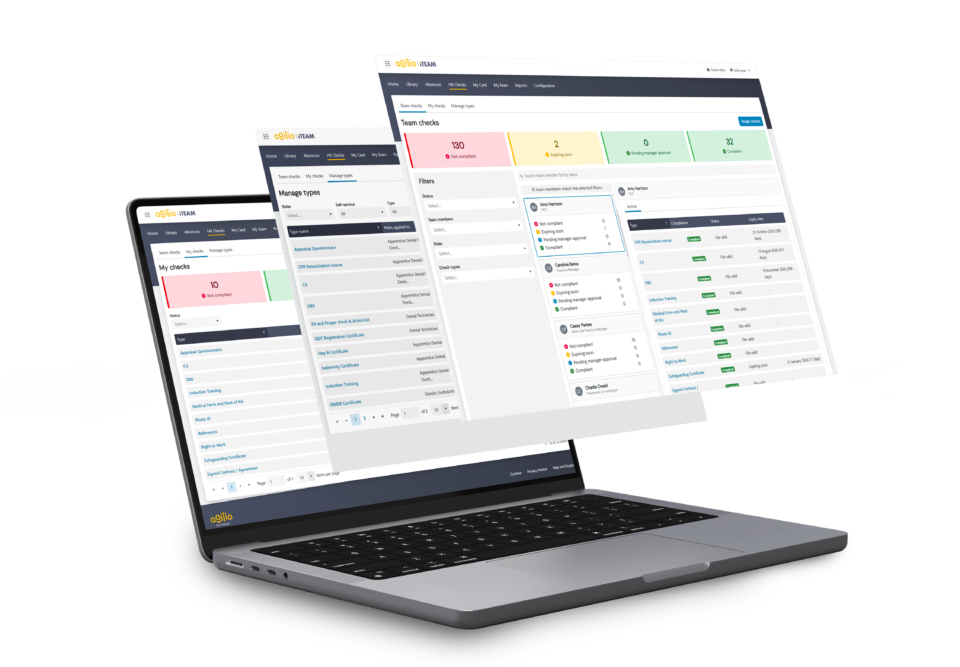
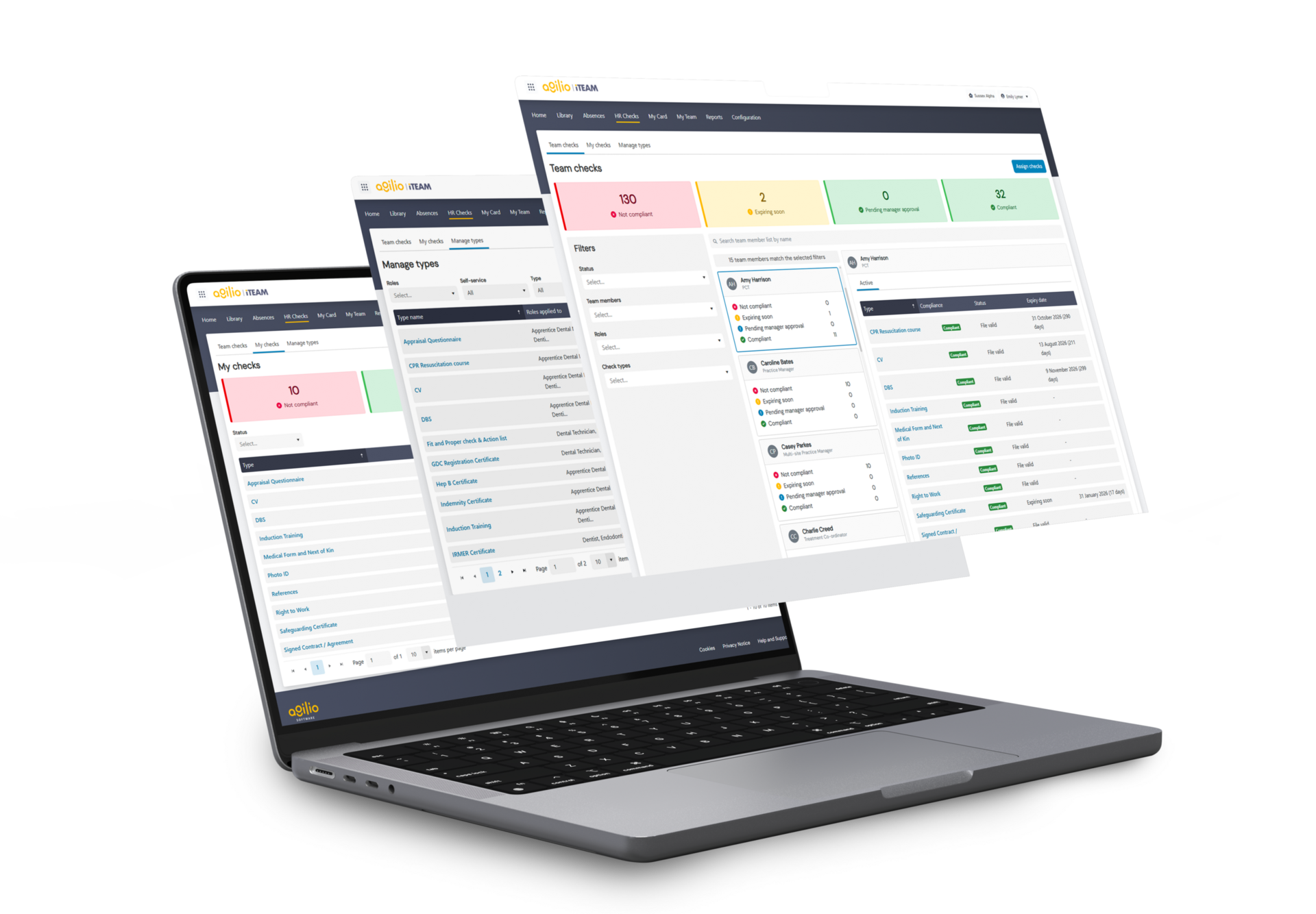
| HR integration | Not available | Links with iTeam HR for leave approvals and absence records |
| Setup time | Immediate (everyone knows Excel) | Days to weeks, depending on onboarding support |
| Cost | Free (but slow) | From £10/month for up to 5 staff (iTeam Rota) |
Spreadsheets remain a reasonable choice for single-vet practices with a very small team. For practices with five or more staff, the time cost of rota admin and the risk of gaps or miscommunication typically justifies the switch to dedicated software.
How to choose rota software for an independent vet practice
When evaluating rota software for a veterinary practice, the following criteria matter most for an independent practice:
- Built for veterinary: the software should understand role types (vet, nurse, VNA, receptionist) and shift categories (consults, ops, on-call) out of the box. Generic HR tools often require heavy configuration.
- Absence and leave integration: the rota and absence management should share data, not live in separate systems.
- Simple enough for everyone: the rota administrator (often a practice manager without a technical background) should be able to build and update rotas without training every week.
- Staff-facing access: staff should be able to view their own shifts from a mobile device. This removes a significant volume of manager queries.
- Scalable across sites: if you plan to grow, choose software that can handle multiple locations without requiring a separate licence or system for each site.
- Pricing transparency: look for per-headcount pricing with a clear scale so you know your costs as you grow. iTeam Rota starts from £10 per month for up to 5 staff.
- Onboarding and support: ask how long setup takes and what support is included. A good onboarding team should be able to get you live within a week.
iTeam Rota is built specifically for veterinary practices. It integrates with iTeam HR, giving practice managers a joined-up view of staff scheduling, leave, and compliance from a single platform.