
Veterinary rota management: answers to the most common questions

Agilio Team
If you’re still managing rotas from a spreadsheet, you’re not alone. Most independent practices are. These questions cover the things practice managers and owners ask most about making the switch to dedicated rota software, and what a difference it can make to your team.
Veterinary rota software is a digital tool that helps practice managers and owners plan, publish and adjust staff schedules. It replaces spreadsheets, whiteboards, and messaging apps with a single system that shows who is working, what shift they are on, and whether there is safe clinical cover across the day. In the UK, it is used by independent practices of all sizes, from single-site clinics to small multi-site groups.
There is no single legal staffing ratio for UK veterinary practices, but the RCVS Code of Professional Conduct requires that practices maintain adequate staffing to provide safe patient care at all times. In practice, this means having sufficient clinical cover for all consult, ops, and ward rounds planned in the rota, with contingency for sickness. Most independent practices find that safe minimum cover requires at least one veterinary surgeon and one registered veterinary nurse on site during all clinical sessions, with additional staff for surgery and inpatient care.
When a team member calls in sick, the practice manager needs to know immediately who is scheduled, what clinical sessions are affected, and who might be available to cover. The fastest way to manage this is through a rota system that shows all of this information in a single view rather than requiring calls and messages to piece it together. Once cover is arranged, any changes to the rota should be communicated digitally so all staff see the updated schedule immediately.
A fair veterinary rota distributes unsocial hours, including weekends, bank holidays, and on-call shifts, as evenly as possible across eligible staff. Fairness requires data: you need a record of who has worked which shifts over time to be able to check that patterns are balanced. Publishing the rota to all staff in advance, and giving them visibility of how on-call and weekend allocations are distributed, also builds trust and reduces the perception of favouritism.
On-call management works best when it is planned as part of the main rota rather than arranged separately. Building on-call into the rota template means it rotates predictably, staff know their obligations in advance, and the manager can see at a glance whether the on-call burden is being shared fairly. Tracking who has completed on-call historically is equally important for managing fatigue and fairness over time.
The most reliable way to avoid approving holiday that creates an unsafe gap is to view leave requests and the rota in the same system. When absence and rota cover are managed separately, it is easy to approve a request without realising that two other staff members are already off that week. A rota system that flags cover levels before leave is approved removes this risk.
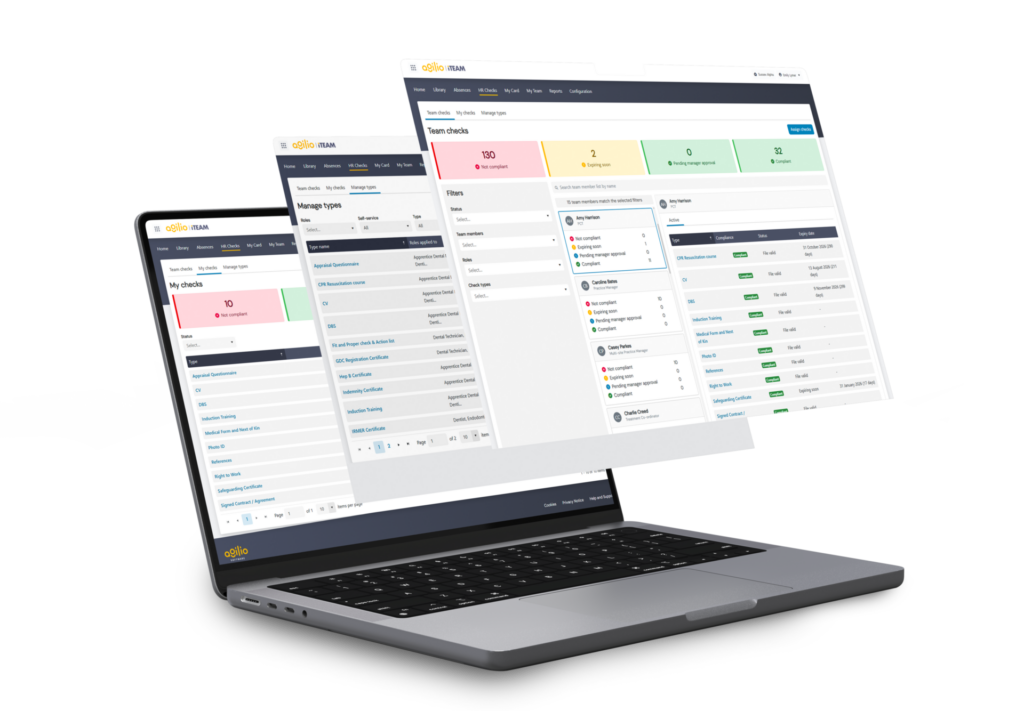
Yes. iTeam Rota from Agilio Software integrates with iTeam, Agilio’s HR management platform, and iLearn, its CPD and training platform. This means practice managers can see HR records, CPD compliance, and rota data together rather than switching between separate tools. CPD days and training commitments can be reflected in the rota automatically, so they are factored into cover planning rather than discovered after the schedule has been published.
For most veterinary practices, getting up and running with dedicated rota software takes a matter of days rather than weeks. The initial setup involves defining your team structure, shift types, and any existing patterns. Agilio’s onboarding team supports this process and trains rota administrators before the system goes live. Most practices find the time investment is recovered quickly once weekly rota planning no longer requires manual rebuilding from scratch.
iTeam Rota is rota and scheduling software designed specifically for UK veterinary practices by Agilio Software. Unlike general workforce scheduling tools, it is built around the role types and shift patterns that veterinary practices actually use, including consults, ops lists, wards, reception and on-call. It connects with iTeam for HR management and iLearn for CPD tracking, giving practice managers a joined-up view of their team rather than requiring multiple separate systems.
Pricing for iTeam Rota varies depending on practice size and the combination of Agilio products used but prices start from £10 for up to 5 people. Practices should contact Agilio here or on 0330 236 8399 for a quote based on their specific team size and requirements.
You may be interested in
Why pricing complaints are often a communication problem, not a cost problem
The CMA received more than 45,000 responses from pet owners flagging concerns about rising veterinary bills, sparking a profession-wide conversation about pricing . With the outcome of the investigation emphasising cost transparency, veterinary practices may need to review how pricing information, estimates and treatment options are communicated to clients. For many teams, this will be…

Veterinary Nursing Awareness Month 2026: recognising your nursing team in a year of real change
2026 has not been a quiet year for veterinary practice. The CMA published its final decision in March, bringing confirmed changes that will affect how practices operate, communicate with clients and handle prescriptions. The ongoing push for legislative protection of the veterinary nurse title has continued to gather pace and across the profession, the pressure…

The state of the UK veterinary workforce in 2026: what the data tells us
Nine in ten vets and vet nurses describe their work as stressful. If you are running a veterinary practice, you already know what sits behind that number. The question is what to do about it. The RCVS Survey of the Professions is the most comprehensive look at the UK veterinary workforce, conducted every four to…